
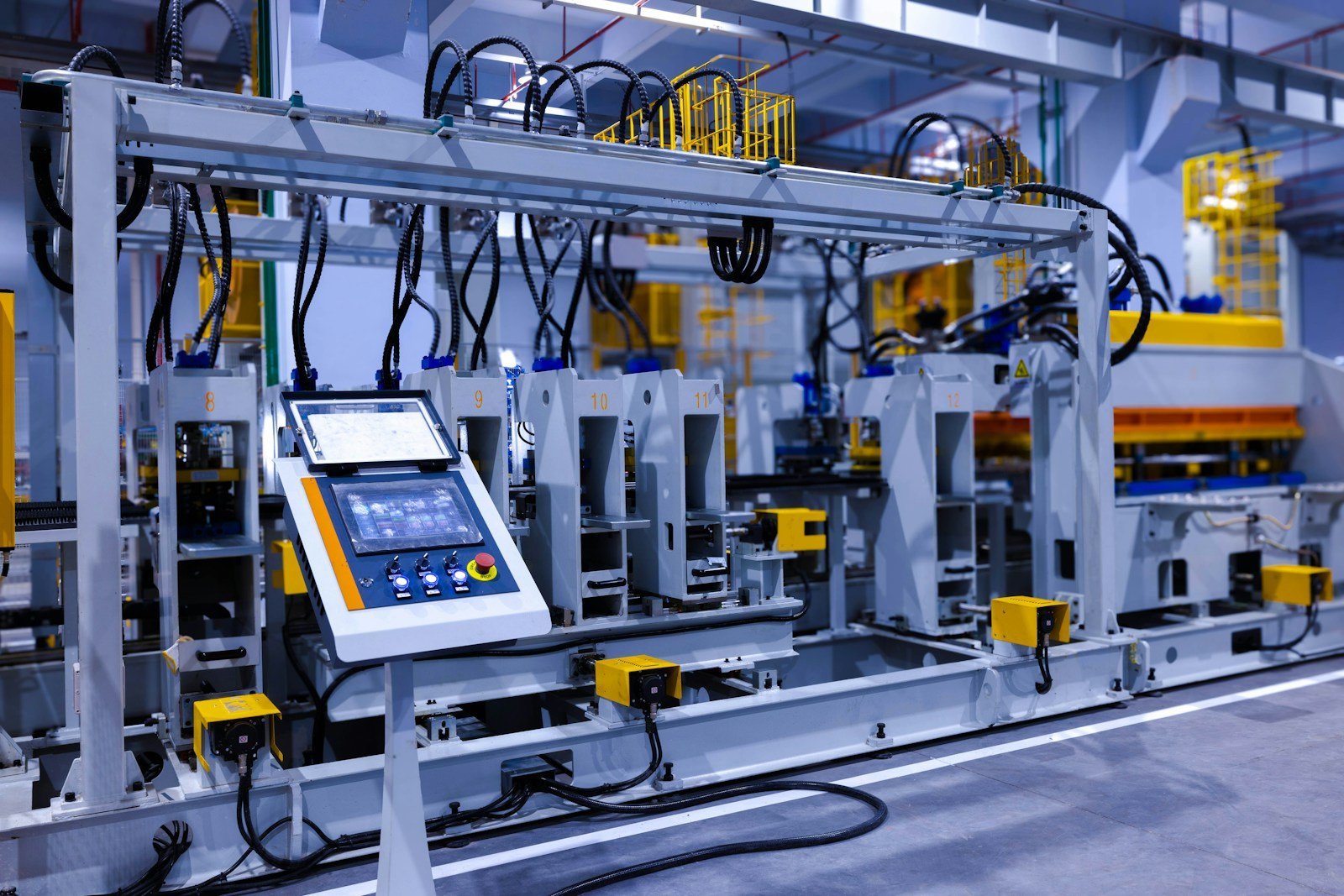
Manufacturing Equipment Trading Solutions

In today’s competitive industrial landscape, finding reliable suppliers and distributors for manufacturing machinery is crucial for businesses aiming to optimize production and reduce costs. H&A Trading specializes in providing comprehensive Manufacturing Equipment Trading Solutions, offering a wide range of industrial machinery and customized equipment solutions for companies worldwide. Whether you are looking for used manufacturing machines for sale, industrial automation systems, or complete factory equipment procurement solutions, H&A Trading ensures quality, reliability, and professional service.

With decades of experience in the industrial sector, H&A Trading has established itself as a leading partner for businesses seeking industrial machinery trading services, CNC machine trading services, and other specialized equipment solutions. In this blog, we’ll explore why choosing H&A Trading is beneficial, the range of products and services offered, and how businesses can leverage these solutions to enhance productivity.

Why Choose H&A Trading for Manufacturing Equipment

Selecting the right trading company for manufacturing equipment is critical. H&A Trading stands out due to:

1. Expertise in Industrial Machinery Trading Services

H&A Trading’s team comprises industry experts who understand the nuances of heavy equipment trading companies and metal fabrication equipment suppliers. Their expertise ensures clients receive machinery that meets global standards and suits specific production needs.

2. Global Reach and Reliable Distribution

With a worldwide network, H&A Trading connects businesses to high-quality manufacturing equipment distributors and facilitates seamless machinery import and export services. This global approach helps manufacturers access both new and used machinery efficiently.

3. Customized Manufacturing Equipment Solutions

Every business has unique production requirements. H&A Trading offers customized manufacturing equipment solutions, including tailored production line equipment trading and industrial process optimization services, ensuring that clients get equipment optimized for efficiency and cost-effectiveness.

Manufacturing Equipment Trading Solutions

Comprehensive Benefits, Features, and Product Solutions by H&A Trading

Benefits of H&A Trading’s Manufacturing Equipment Solutions

Investing in manufacturing equipment trading solutions from H&A Trading brings multiple benefits:

1. Cost-Effective Equipment Options

Through access to used manufacturing machines for sale and flexible industrial equipment leasing solutions, H&A Trading helps businesses reduce upfront capital expenditure without compromising on quality.

2. Enhanced Operational Efficiency

Advanced industrial automation systems and modern CNC machine trading services streamline production processes, reduce human error, and increase output, enabling manufacturers to stay competitive.

3. Comprehensive Support and Maintenance

H&A Trading offers machine installation and maintenance services, ensuring smooth integration of new machinery into existing workflows. This reduces downtime and extends equipment lifespan.

4. Access to Diverse Industrial Equipment

From plastic molding machinery traders to food processing equipment dealers and packaging machinery solutions, H&A Trading provides a one-stop solution for sourcing a broad range of equipment for multiple industries.

5. Compliance and Quality Assurance

All equipment and services offered comply with international safety and quality standards. H&A Trading ensures that every product is inspected, certified, and ready for industrial deployment.


Features of H&A Trading’s Equipment and Services

H&A Trading’s offerings go beyond simple machinery supply. Key features include:

  • Industrial Tools and Equipment Sales – High-quality tools for various industrial applications.

  • Engineering Machinery Exporters – Seamless global shipping and customs support.

  • Factory Equipment Procurement Solutions – End-to-end support in sourcing machinery for new plants.

  • Industrial Spare Parts Suppliers – Ready availability of replacement parts to minimize downtime.

  • Machine Installation and Maintenance Services – Professional setup and ongoing technical support.

  • Industrial Process Optimization Services – Consultancy to improve production efficiency.


Product Categories Offered by H&A Trading

1. CNC Machine Trading Services

H&A Trading provides a range of CNC machines, including milling, turning, and multi-axis machines, sourced from reputed manufacturers worldwide. These machines are ideal for precision metal fabrication and component manufacturing.

2. Metal Fabrication Equipment Suppliers

For industries such as automotive, aerospace, and construction, H&A Trading offers metal fabrication equipment, including laser cutting machines, press brakes, and welding systems.

3. Plastic Molding Machinery Traders

H&A Trading supplies a variety of plastic molding machinery, including injection molding machines, blow molding units, and extrusion systems, enabling efficient production of plastic components.

4. Food Processing Equipment Dealers

Food manufacturers can access industrial food processing equipment, from mixers and grinders to packaging lines, helping improve product consistency and reduce operational costs.

5. Packaging Machinery Solutions

For efficient product packaging, H&A Trading provides packaging machinery solutions, including automated filling lines, labeling machines, and wrapping systems.

6. Heavy Equipment Trading Companies

H&A Trading also specializes in heavy equipment trading, supplying construction machinery, industrial lifts, and material handling equipment to global clients.

7. Industrial Automation Systems

Modern production requires automation. H&A Trading offers industrial automation systems, integrating robotics, sensors, and control systems to streamline manufacturing processes.

8. Industrial Equipment Leasing Solutions

For businesses seeking flexibility, industrial equipment leasing solutions allow temporary access to machinery without significant upfront investment, reducing financial risks.

9. Manufacturing Plant Setup Services

H&A Trading provides consultancy and implementation services for manufacturing plant setup, guiding clients from layout design to equipment installation.


How H&A Trading Supports Businesses Worldwide

Global Procurement and Logistics

H&A Trading handles international shipping, customs clearance, and logistics, ensuring timely delivery of machinery to any location worldwide. This is especially useful for companies looking for machine import and export services.

End-to-End Support

From factory equipment procurement solutions to machine installation and maintenance services, H&A Trading ensures that every client receives comprehensive support, reducing downtime and operational risks.

Technology and Process Optimization

By offering industrial process optimization services, H&A Trading helps companies integrate the latest technology into their production processes, improving efficiency, reducing waste, and increasing profitability.

What Are the Benefits of Manufacturing Equipment Trading Solutions?

BenefitDescriptionKey AdvantageApplicable Industries
Cost-Effective OptionsAccess to used machines & leasingReduces upfront costsAll manufacturing sectors
Operational EfficiencyAutomation & CNC machinesStreamlines productionMetal, plastic, food industries
Support & MaintenanceInstallation & ongoing supportMinimizes downtimeFactories & production plants
Diverse EquipmentMetal, plastic, food, packaging machinesOne-stop sourcingAutomotive, FMCG, packaging
Quality AssuranceCertified and inspected machineryEnsures safety & reliabilityGlobal manufacturing
Flexibility & ScalabilityLeasing & customized solutionsAdapts to production needsSMEs & large manufacturers

What makes H&A Trading’s Manufacturing Equipment Trading Solutions unique?

H&A Trading offers global manufacturing equipment trading solutions, combining new and used manufacturing machines for sale, customized equipment, and end-to-end support, making them a trusted partner worldwide.

Understanding Modern Manufacturing Equipment Manufacturing equipment plays a pivotal role in today’s industrial landscape. From large-scale production lines to specialized machinery, every piece contributes to efficiency, quality, and output. Businesses rely on a combination of precision tools, automated systems, and heavy machinery to maintain competitiveness in global markets. Modern equipment is designed to reduce human error, improve safety, and enhance production speed. For example, automation systems can perform repetitive tasks with high precision, freeing human workers for more complex operations. Similarly, CNC machines allow manufacturers to produce intricate components that would be impossible or inefficient to create manually. Key Categories of Industrial Equipment Industrial equipment can be broadly divided into several categories, each serving distinct purposes in manufacturing. Understanding these categories helps businesses make informed decisions when planning production processes. 1. Material Handling Equipment Material handling machinery includes conveyors, cranes, forklifts, and automated guided vehicles (AGVs). These tools ensure that raw materials, components, and finished products are transported efficiently within a facility. Proper handling equipment minimizes bottlenecks, reduces workplace injuries, and supports lean manufacturing practices. 2. Machine Tools Machine tools like lathes, milling machines, and grinders are essential for shaping and finishing metal, plastic, and composite materials. These machines are often integrated into larger production lines and can be customized for specific manufacturing needs. Precision and reliability are critical in this category, as the quality of the output depends heavily on the machinery’s performance. 3. Automation Systems Automation has transformed modern manufacturing. Robotics, programmable logic controllers (PLCs), and automated assembly lines improve consistency, speed, and safety. These systems are particularly valuable in industries like automotive, electronics, and pharmaceuticals, where precision and repeatability are crucial. 4. Packaging and Processing Equipment Packaging machinery, mixers, extruders, and food processing lines allow manufacturers to maintain product quality and meet regulatory standards. Automation in this sector reduces waste, speeds up production, and ensures uniformity in product output. 5. Support Equipment This includes tools for maintenance, quality control, inspection, and testing. Examples are gauges, sensors, and industrial scales. Support equipment ensures that production processes remain smooth and that machinery operates at peak performance. Factors to Consider When Choosing Equipment Selecting the right machinery involves multiple considerations beyond price. Businesses must evaluate: Production Requirements: Understand the volume and complexity of products to be manufactured. Space and Layout: Consider the available floor space and how machinery will be arranged for efficient workflow. Integration: Ensure that new equipment integrates seamlessly with existing processes and systems. Maintenance Needs: Evaluate the ease of maintenance and availability of spare parts. Energy Efficiency: Modern equipment often offers energy-saving features that reduce operational costs. Safety and Compliance: Equipment must meet safety standards and regulatory requirements to protect workers and avoid penalties. Emerging Trends in Industrial Equipment The manufacturing sector is continuously evolving. Companies that stay updated with trends can gain a competitive edge. Key trends include: 1. Industry 4.0 Integration Smart factories are increasingly adopting digital technologies, including IoT sensors, real-time data monitoring, and AI-driven predictive maintenance. This reduces downtime and allows for more efficient production planning. 2. Additive Manufacturing 3D printing is gaining traction for producing prototypes, customized components, and even small-batch production. It offers flexibility and reduces material waste. 3. Sustainable Manufacturing Eco-friendly machinery, energy-efficient processes, and recycling systems are becoming standard. Sustainability not only reduces costs but also aligns with global environmental regulations and corporate responsibility goals. 4. Collaborative Robotics Cobots, or collaborative robots, work alongside humans to enhance productivity without replacing the workforce. They are designed for safety and versatility in various tasks. Best Practices for Industrial Equipment Management Proper management ensures that machinery operates efficiently and has a longer lifespan. Some best practices include: Regular Preventive Maintenance: Scheduled maintenance reduces unexpected breakdowns. Training Employees: Proper training ensures that operators handle equipment correctly. Monitoring Performance: Use sensors and software to track equipment efficiency and detect issues early. Standardizing Procedures: Implement standard operating procedures for consistency and quality. Inventory Management: Keep critical spare parts on hand to minimize production interruptions. Global Manufacturing Insights Different regions have distinct approaches to manufacturing equipment and processes. Asia: Strong focus on mass production and cost-effective machinery. Countries like China, Japan, and South Korea lead in automation and robotics integration. Europe: Emphasis on precision, quality, and advanced manufacturing technologies. Germany, Italy, and Switzerland are known for high-end machine tools. North America: A balance of innovation and scalability, with a focus on automation, smart factories, and sustainable manufacturing practices. Challenges in Equipment Procurement While machinery is critical, procurement comes with challenges: High Initial Investment: Industrial equipment often requires significant capital. Rapid Technological Changes: New technologies can make existing machinery obsolete quickly. Supply Chain Complexity: International sourcing can involve long lead times and customs delays. Maintenance and Support: Finding skilled technicians and sourcing parts can be challenging. Strategies for Successful Equipment Implementation To maximize the benefits of industrial equipment, manufacturers should consider: Conducting a detailed needs assessment before purchasing machinery. Consulting with experts to select the right equipment type and capacity. Ensuring proper training and change management during implementation. Establishing a maintenance schedule to prolong equipment life. Continuously monitoring production performance to optimize processes. Case Study Examples Automotive Manufacturing: Robotic welding lines and CNC machines allow high-volume production of car components with precision and minimal error. Food Industry: Automated packaging lines and mixers reduce manual labor, improve hygiene, and maintain consistent product quality. Metal Fabrication: Laser cutting and press brake machines enable custom metal parts production efficiently for construction and aerospace sectors. The Future of Manufacturing Looking ahead, manufacturing is likely to become more digital, connected, and sustainable. Advances in AI, IoT, robotics, and additive manufacturing will reshape production lines. Manufacturers that invest in modern equipment, process optimization, and employee training will be better positioned to meet global demand and maintain competitive advantages. Planning and Designing a Modern Factory Designing an efficient factory begins with a clear understanding of workflow, production goals, and resource management. The layout of a manufacturing facility significantly impacts productivity, employee safety, and overall operational efficiency. Workflow Optimization A smooth workflow ensures that materials move seamlessly from one stage of production to the next. Factories are often designed with linear or U-shaped production lines to minimize movement and handling. Incorporating automated material transport systems, such as conveyors and robotic shuttles, further reduces delays and human intervention. Space Utilization Effective space utilization maximizes operational efficiency without compromising safety. Factors to consider include ceiling height for overhead cranes, aisle width for forklifts, and storage areas for raw materials and finished goods. Multi-level storage and mezzanine platforms are increasingly popular in facilities with limited floor space. Safety Considerations Safety is a core aspect of factory design. Clear signage, emergency exits, proper lighting, and safety barriers are essential. Machinery should be equipped with protective shields, automatic shutoffs, and fail-safe mechanisms. Ergonomically designed workstations prevent repetitive strain injuries, and regular training ensures staff are aware of safety procedures. Maintenance and Reliability Keeping equipment in top condition is crucial to avoid production interruptions. Maintenance practices can be divided into three main types: preventive, predictive, and reactive. Preventive Maintenance This involves routine inspections, lubrication, calibration, and replacement of wear-prone parts before they fail. Preventive maintenance reduces unplanned downtime and extends equipment lifespan. Scheduling these activities around production schedules ensures minimal disruption. Predictive Maintenance Predictive techniques use sensors, data analytics, and condition-monitoring software to anticipate potential failures. By tracking vibrations, temperature changes, and operational anomalies, managers can intervene before problems escalate. Predictive maintenance is more cost-efficient than reactive approaches, as it reduces emergency repairs. Reactive Maintenance Reactive maintenance occurs after a failure has already happened. While unavoidable in some cases, overreliance on this approach can lead to lost productivity, higher costs, and safety risks. A balanced maintenance strategy combines preventive, predictive, and reactive methods for optimal performance. Employee Training and Skill Development Investing in human capital is as important as investing in equipment. Properly trained employees ensure smooth operations and reduce the risk of accidents. Equipment Operation Training Operators must understand how to safely and efficiently use machinery. Training programs cover machine setup, operational procedures, safety precautions, and troubleshooting. Regular refresher courses keep skills up-to-date and reduce error rates. Process Optimization Education Employees should also be trained in production planning, quality control, and process optimization. Knowledge of lean manufacturing principles, waste reduction techniques, and workflow improvement helps staff contribute to overall efficiency. Cross-Training Cross-training employees on multiple roles enhances flexibility and reduces bottlenecks. For instance, a worker skilled in both machine operation and quality inspection can fill in when needed, maintaining productivity during absences or high-demand periods. Energy Efficiency and Sustainability Modern factories are increasingly focused on sustainability, both for environmental responsibility and operational cost savings. Energy-Efficient Machinery Investing in energy-efficient equipment reduces electricity consumption and operational costs. Motors, compressors, and lighting systems with energy-saving features contribute to long-term savings while minimizing environmental impact. Waste Reduction Minimizing waste is essential for sustainable operations. Material optimization, recycling, and smart inventory management prevent unnecessary consumption. Efficient layout planning also reduces scrap and material handling losses. Water and Resource Management Water recycling systems, smart irrigation for onsite landscaping, and monitoring resource usage help reduce overall consumption. Many industries, particularly food and chemical manufacturing, benefit from closed-loop systems that minimize water and raw material waste. Adopting Technology in Manufacturing Technology adoption is no longer optional; it’s a key driver of competitiveness. Data-Driven Decision Making Modern factories generate vast amounts of operational data. By analyzing production rates, machine performance, and quality metrics, managers can make informed decisions to improve efficiency. Real-time dashboards and reporting software help detect trends and areas for improvement. Robotics and Automation Robotics not only increase speed and precision but also improve workplace safety. Cobots, or collaborative robots, are designed to work alongside humans in assembly lines and material handling. Automated guided vehicles move materials efficiently, reducing human fatigue and errors. Software Integration Manufacturing execution systems (MES), enterprise resource planning (ERP), and inventory management software streamline operations. These tools provide visibility across departments, help manage production schedules, and improve coordination between teams. Industry Trends and Innovations Staying updated with industry trends allows manufacturers to anticipate changes and adopt improvements before competitors. Modular Production Systems Modular production lines allow manufacturers to reconfigure layouts quickly in response to changing demands. These systems reduce downtime when introducing new products and make expansion easier without major overhauls. Smart Sensors and IoT The Internet of Things (IoT) enables real-time monitoring of equipment performance, temperature, humidity, and vibration. Smart sensors alert managers to potential issues before they impact production, enhancing reliability and quality. Additive Manufacturing 3D printing and additive manufacturing are no longer limited to prototyping. Small-scale production of complex parts reduces lead times and allows for customization. This flexibility is particularly valuable for industries like aerospace, healthcare, and automotive. Collaborative Supply Chains Connected factories are part of global, integrated supply chains. Real-time communication between suppliers, logistics partners, and production facilities ensures timely delivery of materials and smooth production flow. Quality Management and Compliance High-quality standards are crucial for customer satisfaction and regulatory compliance. Standard Operating Procedures Well-documented standard operating procedures ensure consistency in production. SOPs cover machine operation, quality checks, safety protocols, and maintenance procedures. Quality Control Systems Inspection stations, automated quality checks, and statistical process control ensure products meet specifications. Advanced vision systems can detect defects in real time, reducing waste and rework. Certifications and Compliance Industries often require compliance with international standards, such as ISO, GMP, or OSHA regulations. Adhering to these standards ensures product quality, workplace safety, and global market acceptance. Planning for Growth and Scalability A successful factory is designed with growth in mind. Flexible Equipment Layout Equipment should be arranged so new machines can be added without major disruption. Modular workstations and movable machinery support scalable operations. Workforce Planning A growing facility requires careful workforce management. Hiring plans, training programs, and succession planning ensure that the organization can handle increased production demands. Investment in Technology Continuous investment in technology keeps the factory competitive. Upgrading machines, implementing automation, and integrating digital tools allow facilities to scale efficiently. Risk Management in Manufacturing Manufacturing is inherently risky, and risk management is critical for uninterrupted operations. Equipment Failure Regular maintenance, predictive monitoring, and contingency plans minimize downtime due to equipment failure. Supply Chain Disruptions Diversifying suppliers and maintaining buffer stock helps mitigate delays caused by logistics or raw material shortages. Safety Risks Implementing safety protocols, conducting regular audits, and providing training protects workers and reduces liability. Market Volatility Flexible production planning and adaptable machinery help manufacturers respond to fluctuating market demands without excessive financial risk. Conclusion Modern manufacturing requires careful planning, skilled employees, and reliable machinery. By focusing on workflow optimization, equipment maintenance, energy efficiency, technological adoption, and quality management, manufacturers can enhance productivity and stay competitive. Investing in employee training, safety measures, and scalable operations ensures long-term success. Additionally, staying informed about emerging trends, industry innovations, and global best practices allows companies to adapt and grow in a rapidly evolving market. A holistic approach that balances operational efficiency, technological integration, and sustainability prepares manufacturing facilities for both current demands and future challenges.