
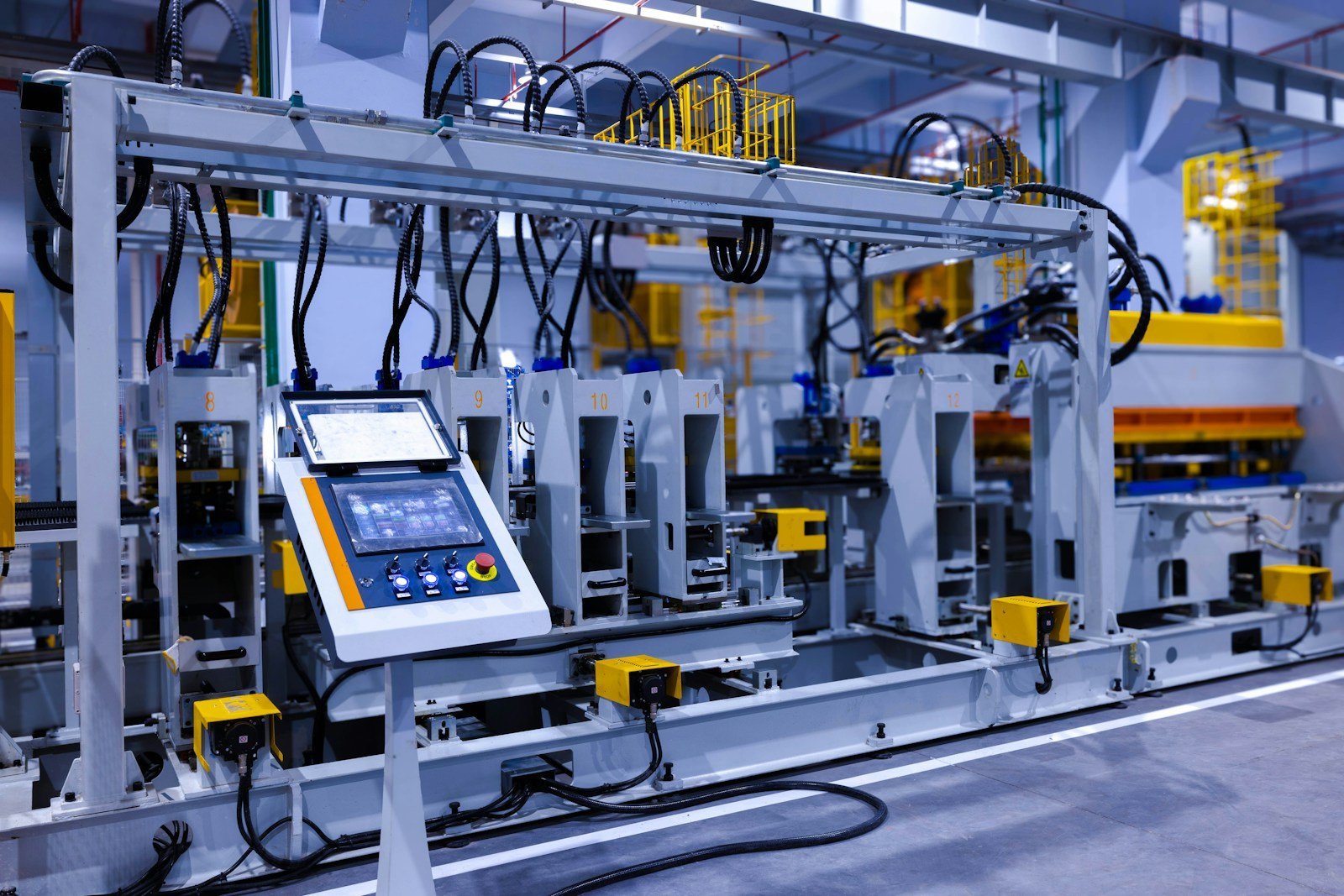
Manufacturing Equipment Trading Solutions

In today’s competitive industrial landscape, finding reliable suppliers and distributors for manufacturing machinery is crucial for businesses aiming to optimize production and reduce costs. H&A Trading specializes in providing comprehensive Manufacturing Equipment Trading Solutions, offering a wide range of industrial machinery and customized equipment solutions for companies worldwide. Whether you are looking for used manufacturing machines for sale, industrial automation systems, or complete factory equipment procurement solutions, H&A Trading ensures quality, reliability, and professional service.

With decades of experience in the industrial sector, H&A Trading has established itself as a leading partner for businesses seeking industrial machinery trading services, CNC machine trading services, and other specialized equipment solutions. In this blog, we’ll explore why choosing H&A Trading is beneficial, the range of products and services offered, and how businesses can leverage these solutions to enhance productivity.

Why Choose H&A Trading for Manufacturing Equipment

Selecting the right trading company for manufacturing equipment is critical. H&A Trading stands out due to:

1. Expertise in Industrial Machinery Trading Services

H&A Trading’s team comprises industry experts who understand the nuances of heavy equipment trading companies and metal fabrication equipment suppliers. Their expertise ensures clients receive machinery that meets global standards and suits specific production needs.

2. Global Reach and Reliable Distribution

With a worldwide network, H&A Trading connects businesses to high-quality manufacturing equipment distributors and facilitates seamless machinery import and export services. This global approach helps manufacturers access both new and used machinery efficiently.

3. Customized Manufacturing Equipment Solutions

Every business has unique production requirements. H&A Trading offers customized manufacturing equipment solutions, including tailored production line equipment trading and industrial process optimization services, ensuring that clients get equipment optimized for efficiency and cost-effectiveness.

Manufacturing Equipment Trading Solutions

Comprehensive Benefits, Features, and Product Solutions by H&A Trading

Benefits of H&A Trading’s Manufacturing Equipment Solutions

Investing in manufacturing equipment trading solutions from H&A Trading brings multiple benefits:

1. Cost-Effective Equipment Options

Through access to used manufacturing machines for sale and flexible industrial equipment leasing solutions, H&A Trading helps businesses reduce upfront capital expenditure without compromising on quality.

2. Enhanced Operational Efficiency

Advanced industrial automation systems and modern CNC machine trading services streamline production processes, reduce human error, and increase output, enabling manufacturers to stay competitive.

3. Comprehensive Support and Maintenance

H&A Trading offers machine installation and maintenance services, ensuring smooth integration of new machinery into existing workflows. This reduces downtime and extends equipment lifespan.

4. Access to Diverse Industrial Equipment

From plastic molding machinery traders to food processing equipment dealers and packaging machinery solutions, H&A Trading provides a one-stop solution for sourcing a broad range of equipment for multiple industries.

5. Compliance and Quality Assurance

All equipment and services offered comply with international safety and quality standards. H&A Trading ensures that every product is inspected, certified, and ready for industrial deployment.


Features of H&A Trading’s Equipment and Services

H&A Trading’s offerings go beyond simple machinery supply. Key features include:

  • Industrial Tools and Equipment Sales – High-quality tools for various industrial applications.

  • Engineering Machinery Exporters – Seamless global shipping and customs support.

  • Factory Equipment Procurement Solutions – End-to-end support in sourcing machinery for new plants.

  • Industrial Spare Parts Suppliers – Ready availability of replacement parts to minimize downtime.

  • Machine Installation and Maintenance Services – Professional setup and ongoing technical support.

  • Industrial Process Optimization Services – Consultancy to improve production efficiency.


Product Categories Offered by H&A Trading

1. CNC Machine Trading Services

H&A Trading provides a range of CNC machines, including milling, turning, and multi-axis machines, sourced from reputed manufacturers worldwide. These machines are ideal for precision metal fabrication and component manufacturing.

2. Metal Fabrication Equipment Suppliers

For industries such as automotive, aerospace, and construction, H&A Trading offers metal fabrication equipment, including laser cutting machines, press brakes, and welding systems.

3. Plastic Molding Machinery Traders

H&A Trading supplies a variety of plastic molding machinery, including injection molding machines, blow molding units, and extrusion systems, enabling efficient production of plastic components.

4. Food Processing Equipment Dealers

Food manufacturers can access industrial food processing equipment, from mixers and grinders to packaging lines, helping improve product consistency and reduce operational costs.

5. Packaging Machinery Solutions

For efficient product packaging, H&A Trading provides packaging machinery solutions, including automated filling lines, labeling machines, and wrapping systems.

6. Heavy Equipment Trading Companies

H&A Trading also specializes in heavy equipment trading, supplying construction machinery, industrial lifts, and material handling equipment to global clients.

7. Industrial Automation Systems

Modern production requires automation. H&A Trading offers industrial automation systems, integrating robotics, sensors, and control systems to streamline manufacturing processes.

8. Industrial Equipment Leasing Solutions

For businesses seeking flexibility, industrial equipment leasing solutions allow temporary access to machinery without significant upfront investment, reducing financial risks.

9. Manufacturing Plant Setup Services

H&A Trading provides consultancy and implementation services for manufacturing plant setup, guiding clients from layout design to equipment installation.


How H&A Trading Supports Businesses Worldwide

Global Procurement and Logistics

H&A Trading handles international shipping, customs clearance, and logistics, ensuring timely delivery of machinery to any location worldwide. This is especially useful for companies looking for machine import and export services.

End-to-End Support

From factory equipment procurement solutions to machine installation and maintenance services, H&A Trading ensures that every client receives comprehensive support, reducing downtime and operational risks.

Technology and Process Optimization

By offering industrial process optimization services, H&A Trading helps companies integrate the latest technology into their production processes, improving efficiency, reducing waste, and increasing profitability.

What Are the Benefits of Manufacturing Equipment Trading Solutions?

BenefitDescriptionKey AdvantageApplicable Industries
Cost-Effective OptionsAccess to used machines & leasingReduces upfront costsAll manufacturing sectors
Operational EfficiencyAutomation & CNC machinesStreamlines productionMetal, plastic, food industries
Support & MaintenanceInstallation & ongoing supportMinimizes downtimeFactories & production plants
Diverse EquipmentMetal, plastic, food, packaging machinesOne-stop sourcingAutomotive, FMCG, packaging
Quality AssuranceCertified and inspected machineryEnsures safety & reliabilityGlobal manufacturing
Flexibility & ScalabilityLeasing & customized solutionsAdapts to production needsSMEs & large manufacturers

What makes H&A Trading’s Manufacturing Equipment Trading Solutions unique?

H&A Trading offers global manufacturing equipment trading solutions, combining new and used manufacturing machines for sale, customized equipment, and end-to-end support, making them a trusted partner worldwide.

Manufacturing Equipment Trading Solutions Industrial machinery trading services Manufacturing equipment distributors Used manufacturing machines for sale Industrial automation systems CNC machine trading services Heavy equipment trading companies Metal fabrication equipment suppliers Plastic molding machinery traders Food processing equipment dealers Packaging machinery solutions Industrial tools and equipment sales Manufacturing plant setup services Production line equipment trading Engineering machinery exporters Industrial spare parts suppliers Machine installation and maintenance services Industrial equipment leasing solutions Machinery import and export services Factory equipment procurement solutions Customized manufacturing equipment solutions Industrial process optimization services Modern manufacturing industries form the foundation of global economic growth, supporting sectors such as construction, transportation, healthcare, energy, agriculture, food production, consumer goods, and technology development. Behind every successful manufacturing operation is a complex network of machinery, production systems, engineering expertise, logistics coordination, and operational planning. As industrial sectors continue evolving, businesses increasingly depend on advanced equipment solutions to improve efficiency, maintain product quality, and remain competitive in rapidly changing markets. The industrial sector has undergone significant transformation over the past several decades. Traditional manufacturing methods that relied heavily on manual labor and basic mechanical systems have gradually been replaced by automated production technologies, precision engineering systems, and digitally integrated operations. These advancements have improved productivity, reduced operational errors, and enabled manufacturers to produce goods with greater consistency and speed. Machinery plays a central role in every stage of industrial production. Production equipment supports raw material processing, component fabrication, assembly operations, packaging, storage, and logistics management. Different industries require specialized systems designed for specific operational requirements, environmental conditions, and production capacities. The growing complexity of manufacturing processes has increased demand for reliable machinery solutions that support long-term industrial performance. Industrial automation has become one of the most important developments within modern manufacturing environments. Automation technologies allow production facilities to operate more efficiently by reducing manual intervention, improving precision, and increasing operational consistency. Automated systems can manage repetitive tasks, monitor production performance, control material handling, and support quality assurance procedures with minimal human error. Manufacturers increasingly invest in automated technologies because of their ability to improve productivity while reducing long-term operational costs. Automated systems also help businesses maintain stable production quality, especially in industries where precision and consistency are essential. Sectors such as automotive manufacturing, electronics production, food processing, pharmaceuticals, and packaging rely heavily on automation to meet large-scale production demands. Precision engineering has become another major focus area within industrial manufacturing. Modern production systems require highly accurate machining and fabrication processes to meet engineering standards and customer expectations. Advanced machining equipment allows manufacturers to create complex components with tight tolerances and high repeatability. This precision is especially important in industries such as aerospace, medical technology, automotive engineering, and industrial equipment manufacturing. Computer-controlled machinery has transformed production capabilities significantly. Digital control systems allow operators to program cutting paths, production sequences, material dimensions, and operational parameters with high accuracy. These technologies improve production speed while reducing material waste and improving product consistency. The role of machinery distribution and industrial supply networks has also become increasingly important. Manufacturing facilities depend on reliable access to equipment, spare parts, maintenance support, and technical expertise to maintain uninterrupted operations. Delays in equipment availability or component replacement can impact production schedules and operational efficiency. Strong supply chain systems help businesses maintain continuity and reduce operational risks. Industrial sectors often require customized solutions rather than standard equipment alone. Production environments differ based on industry type, facility layout, production volume, material handling requirements, and environmental conditions. Equipment providers and engineering specialists frequently work together to develop systems tailored to specific operational needs. Customized production lines and specialized machinery help manufacturers optimize workflow efficiency and maximize productivity. Maintenance and operational reliability are critical aspects of industrial performance. Production facilities depend on machinery operating consistently under demanding conditions. Preventive maintenance programs, equipment inspections, lubrication systems, calibration procedures, and component monitoring help reduce the risk of unexpected failures and operational downtime. Predictive maintenance technologies are becoming increasingly common in modern manufacturing environments. Digital monitoring systems collect operational data related to temperature, vibration, pressure, and equipment performance. Advanced analytics can identify early warning signs of mechanical problems, allowing maintenance teams to address issues before major failures occur. This proactive approach improves equipment lifespan and operational reliability. Industrial safety remains one of the highest priorities within manufacturing operations. Heavy machinery, automated systems, and production equipment require strict safety procedures to protect workers and maintain regulatory compliance. Manufacturing facilities implement safety barriers, emergency shutdown systems, protective equipment requirements, and operator training programs to reduce workplace risks. Training and workforce development continue playing essential roles in industrial operations. As manufacturing technologies become more advanced, employees require specialized technical knowledge to operate, maintain, and troubleshoot complex systems. Skilled technicians, engineers, machine operators, automation specialists, and maintenance personnel all contribute to efficient industrial performance. Digital transformation is reshaping industrial operations across many sectors. Smart manufacturing systems now integrate production equipment, inventory management, quality control, logistics coordination, and operational monitoring into connected digital platforms. Real-time data analysis helps managers track performance, identify inefficiencies, and improve decision-making processes. The concept of smart factories continues gaining momentum globally. Smart manufacturing environments use sensors, automation, cloud computing, and connected devices to improve production visibility and operational control. These technologies allow facilities to monitor machine performance, production output, energy consumption, and maintenance requirements in real time. Energy efficiency has become another major focus area within industrial development. Manufacturing facilities consume significant amounts of energy, making operational efficiency and sustainability increasingly important. Companies invest in energy-efficient machinery, optimized production systems, and waste reduction technologies to lower operational costs and reduce environmental impact. Environmental responsibility continues influencing industrial decision-making as well. Manufacturers are under growing pressure to reduce emissions, improve recycling processes, minimize waste generation, and adopt environmentally responsible production practices. Efficient machinery systems help support these goals by improving material utilization and reducing unnecessary energy consumption. Industrial sectors also rely heavily on global trade and logistics systems. Machinery, components, raw materials, and production equipment often move across international supply chains before reaching manufacturing facilities. Reliable transportation systems, customs coordination, warehousing networks, and procurement planning all contribute to stable industrial operations. The availability of spare parts is especially important for long-term operational continuity. Manufacturing facilities require rapid access to replacement components to minimize downtime during maintenance or repairs. Well-organized spare parts management systems help businesses maintain production efficiency while reducing the impact of equipment failures. Industrial leasing and equipment financing solutions have become increasingly popular among businesses seeking operational flexibility. Rather than purchasing all machinery outright, some companies use leasing models to access modern equipment while managing financial investment more efficiently. This approach allows businesses to upgrade technologies more regularly and adapt to changing production requirements. The food processing sector represents one of the most technologically advanced areas within industrial manufacturing. Food production facilities require specialized machinery designed for hygiene, safety, temperature control, packaging efficiency, and production consistency. Automation systems within food manufacturing help improve speed, reduce contamination risks, and maintain regulatory compliance. Packaging technology has also evolved significantly. Modern packaging systems handle labeling, sealing, sorting, filling, inspection, and distribution processes with high speed and accuracy. Efficient packaging operations improve product protection, storage efficiency, and transportation management while supporting branding and market presentation. Metal fabrication industries rely heavily on advanced cutting, forming, welding, and machining systems. Precision fabrication technologies support industries such as construction, automotive manufacturing, infrastructure development, aerospace engineering, and industrial equipment production. High-performance machinery allows manufacturers to produce durable components with improved accuracy and consistency. Plastic manufacturing and molding technologies continue supporting a wide range of industries including packaging, healthcare, automotive, electronics, and consumer products. Advanced molding systems improve production efficiency while supporting complex product designs and high-volume manufacturing capabilities. Industrial equipment installation requires careful planning and engineering coordination. Large machinery systems often involve structural preparation, utility integration, calibration, safety testing, and operational configuration before production can begin. Professional installation services help ensure systems operate safely and efficiently from the start. Project management plays a major role in large-scale manufacturing development. Factory expansion projects, production line upgrades, and new facility construction require coordination between engineers, contractors, equipment providers, logistics teams, and operational managers. Effective project planning helps reduce delays and maintain budget control. Global economic conditions strongly influence industrial investment and manufacturing activity. Market demand, trade policies, raw material availability, transportation costs, and technological trends all affect production strategies and equipment purchasing decisions. Businesses must remain adaptable to changing market conditions while maintaining operational stability. Innovation remains central to long-term industrial growth. Manufacturers continuously seek technologies that improve efficiency, reduce waste, enhance product quality, and support competitive advantage. Research and development investments help businesses adopt modern production systems and respond to evolving customer expectations. Artificial intelligence and robotics are expected to play even larger roles within future manufacturing operations. Advanced robotic systems already assist with assembly, material handling, quality inspection, and automated logistics processes. Artificial intelligence technologies can analyze production data, predict maintenance requirements, and optimize operational workflows. The growth of e-commerce and global consumer demand has also increased pressure on manufacturing sectors to improve speed and flexibility. Production facilities must often respond quickly to changing order volumes, customized product requirements, and shorter delivery expectations. Flexible manufacturing systems help businesses adapt more effectively to these market changes. Industrial resilience has become increasingly important following recent global disruptions affecting supply chains and production networks. Manufacturers now place greater emphasis on diversified sourcing strategies, local inventory management, backup suppliers, and operational contingency planning to reduce vulnerability during unexpected disruptions. As industrial sectors continue evolving, the demand for advanced machinery, automation technologies, engineering expertise, and operational support will remain strong. Manufacturing industries depend on reliable equipment systems to maintain efficiency, product quality, and long-term business sustainability. The future of industrial manufacturing will continue being shaped by automation, digital integration, sustainability initiatives, advanced engineering technologies, and global operational collaboration. Businesses that invest in innovation, workforce development, and operational efficiency will remain better positioned to succeed in increasingly competitive industrial markets. Modern manufacturing environments are no longer defined solely by production capacity. They are now driven by precision, adaptability, technological integration, sustainability, and operational intelligence. Reliable machinery systems and professional industrial support services will continue playing a critical role in supporting global manufacturing growth and economic development for many years to come. Modern manufacturing industries rely heavily on advanced machinery, automation systems, and efficient production technologies to maintain productivity and operational growth. Industrial facilities require reliable equipment for material processing, fabrication, assembly, packaging, and quality control operations. As global industries continue evolving, businesses increasingly invest in modern production systems that improve efficiency, precision, and long-term operational performance. Automation has become one of the most important developments within manufacturing environments. Advanced technologies help reduce manual workload, improve production consistency, and increase operational speed. Computer-controlled systems and digital monitoring tools allow manufacturers to manage complex production processes with greater accuracy while reducing operational errors and material waste. Precision engineering also plays a major role in modern industrial operations. Manufacturing facilities often require highly accurate machining and fabrication processes to meet quality standards and customer expectations. Advanced production equipment supports industries such as automotive, electronics, food processing, packaging, construction, and industrial engineering. Operational reliability is essential for maintaining uninterrupted production. Regular maintenance, equipment inspections, spare parts management, and technical support services help reduce downtime and improve machinery lifespan. Many businesses also prioritize customized production solutions designed to match specific facility layouts and operational requirements. Technology continues transforming industrial operations through smart manufacturing systems, automation, digital integration, and predictive maintenance tools. These advancements improve production visibility, energy efficiency, workflow management, and overall operational control. Sustainability has also become increasingly important as industries focus on reducing waste, improving energy efficiency, and adopting environmentally responsible manufacturing practices. As global manufacturing sectors continue expanding, reliable machinery systems and professional industrial support services remain essential for supporting productivity, operational efficiency, and long-term industrial development across multiple industries worldwide.